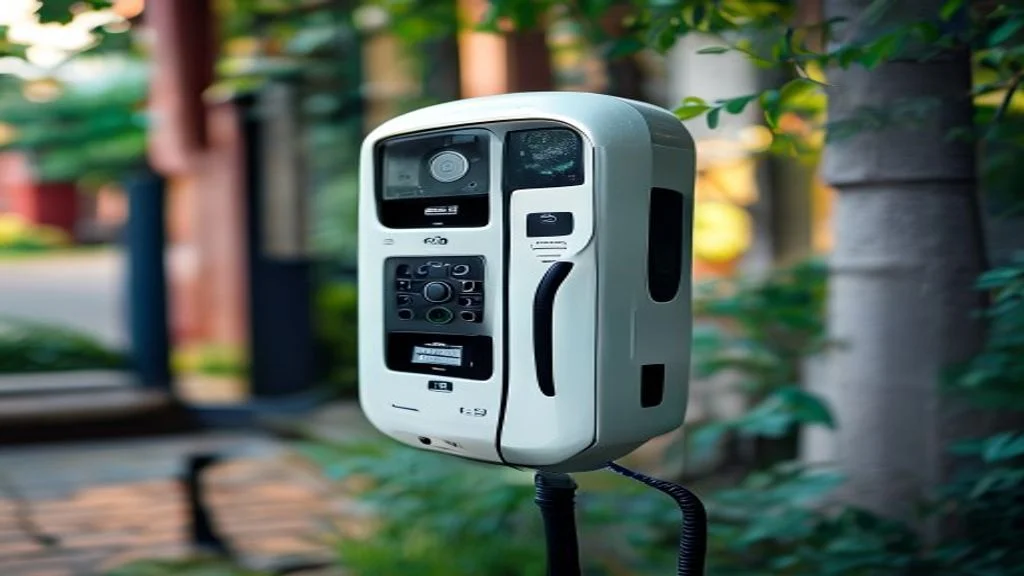
How to Install a Home EV Charger in India – 2024 News‑Analysis Guide
Quick Answer: Installing a home EV charger in India involves confirming your home’s electrical capacity, securing an NOC from the local electricity board, and hiring a certified electrician to fit a Level‑2 (3‑7 kW) AC charger that meets IS 17017/IEC 61851 standards. The typical out‑of‑pocket cost in 2024 ranges from ₹20 000 – ₹35 000 and can be lowered with state subsidies.
Key Takeaways
- Check your house’s load capacity and get a formal NOC before purchasing any charger.
- Most Indian homes benefit from a 3‑phase‑ready conduit to avoid costly retrofits later.
- State subsidies in Delhi, Maharashtra, Karnataka and Tamil Nadu can cut up to ₹40 k off the bill.
- Pairing the charger with off‑peak tariffs or rooftop solar reduces the pay‑back period to about 3‑4 years.
- Only a CEA‑registered electrician may certify the installation; DIY work is illegal and voids warranties.
Introduction – Why Home Charging is the New Normal in India
India’s EV registrations surged by 68 % in 2023‑24, prompting the Ministry of Power to amend its 2023 guidelines with a mandatory smart‑meter requirement for residential chargers. As more urban households acquire electric cars, the demand for safe, compliant, and cost‑effective home charging solutions has exploded. This article compiles the latest policy updates, cost data, and expert advice into a single, up‑to‑date resource for anyone asking how to install home EV charger India. Here’s the thing: you don’t need a PhD in electrical engineering to get it right—just a clear roadmap and the right partners.
Quick‑Start Checklist
Before you lift a screwdriver, verify these five items.
| ✔️ | Checklist Item | Why It Matters |
|---|---|---|
| 1 | Verify home load & voltage (single‑phase 230 V or three‑phase 415 V) | Prevents overload and ensures compliance with IS 17017 |
| 2 | Obtain NOC from your State Electricity Board (SEB) | Legal requirement under the “EV Charging Infrastructure Guidelines” (2023) |
| 3 | Choose a charger that matches your grid capacity & future needs | Avoids re‑wiring later; enables solar/V2G integration |
| 4 | Confirm state‑specific subsidy eligibility | Can shave up to ₹40 k off the bill |
| 5 | Hire a CEA‑registered electrician & schedule inspection | Guarantees safety certification & insurance coverage |
Each point is explored in detail in later sections, with links to official guidelines and subsidy portals. Let’s break this down, step by step, so you never feel lost midway.
Legal & Regulatory Scene
Home EV charger installation in India is governed by three core regulations: the Ministry of Power’s 2023 Guidelines, Indian Standards IS 17017/IEC 61851, and state‑level subsidy schemes. Ignoring any one of these can turn a smooth project into a legal nightmare.
2023 Ministry of Power Guidelines
The guidelines mandate smart‑meter integration for chargers above 3 kW, a minimum 30 mA Type‑B RCD, and fire‑retardant cabling. Compliance is verified during the post‑installation inspection. For the full text, see the Ministry of Power – EV Charging Guidelines 2025. In practice, that means you’ll need a Wi‑Fi‑enabled meter that talks to your utility’s backend—a small extra cost that pays off with smarter charging.
State‑by‑State Incentive Matrix
Key subsidies include:
- Delhi: Up to ₹30 k subsidy plus free installation for 3‑kW AC units.
- Maharashtra: ₹40 k rebate for 3‑7 kW chargers via the “MahaEV” portal.
- Karnataka: 30 % off hardware cost and GST exemption.
- Tamil Nadu & Others: 15 % rebate on labour.
Permits & NOC Process
Typical flow: Application → Grid impact assessment → NOC issuance → Installation → Inspection. Turnaround times range from 7 to 14 days, depending on the state. Detailed procedural steps are outlined on the Tech OVN policy page. If you’re in a hurry, consider engaging a local consultant who can fast‑track the paperwork.
Technical Foundations – How Much Power Do You Need?
Calculate the charger size by dividing your daily mileage by the vehicle’s kWh/100 km rating, then match that to your home’s available ampere rating. It sounds like math, but it’s really just a quick spreadsheet you can finish over a cup of chai.
Load‑Calculation Example
For a 300 km range EV consuming 15 kWh/100 km, weekly energy need is 45 kWh. To replenish in an 8‑hour overnight window, a 5.6 kW charger is ideal, making a 7 kW three‑phase unit a future‑proof choice. That extra headroom means you won’t need a new conduit when you upgrade to a larger battery later.
Wiring & Conduit Sizing
Single‑phase 3 kW: 2.5 mm² copper, 15 A MCB, 6 mm conduit. Three‑phase 7 kW: 4 mm² copper, 32 A MCB, 20 mm conduit. These specifications comply with IS 3043 and IEC BS 7671 tables (IMARC guide). If you’re unsure, ask your electrician to show you the calculation sheet—transparent work builds trust.
Smart‑Meter & Load‑Management Integration
Linking the charger to the utility’s demand‑response platform enables off‑peak charging (₹3/kWh vs ₹7/kWh peak) and can earn rebates for load‑shedding. Utilities such as BSES provide APIs for seamless integration (EV Sahi Hai). In short, a smart‑meter turns your charger into a tiny, revenue‑generating asset.
Step‑by‑Step Installation Guide
Follow these nine numbered steps to get a compliant, safe home charger up and running.
- Pre‑installation audit: Perform load calculation, verify circuit breaker rating, and earmark installation space.
- Select the charger: Use the Master Comparison Table (Section 8) to pick a model that matches your power budget.
- Apply for NOC: Submit load audit, charger datasheet, and owner ID to the SEB.
- Order hardware: Charger, mounting kit, dedicated RCD, and circuit breaker.
- Prepare the site: Drill conduit, lay fire‑retardant cable from the distribution board to the mounting point.
- Mount the charger: Follow manufacturer’s diagram, typically at 1.5 m height.
- Electrical connection: Connect L1/L2/L3, N, PE; install the RCD and MCB as per IS 17017.
- Configure smart‑meter & app: Pair with the utility portal, set charging schedule.
- Final inspection & certification: Licensed electrician signs off; obtain completion certificate from the SEB.
Each step usually takes 1–2 working days; the IECA survey reports a total timeline of 1‑2 days for a standard 3.3 kW unit (IECA 2025 Survey). If you run into a snag, it’s often a paperwork issue—double‑check your load‑calculation sheet.
Master Comparison Table – Best Home EV Chargers for Indian Homes 2024
Below is a sortable table that lines up the top‑rated chargers against Indian‑specific criteria, directly answering how to install home EV charger India with the right hardware.
Related reading: Electric Vehicle Charging Stations Delhi: Growth, Costs & Future Outlook.
Related reading: our analysis.
| Brand / Model | Power (kW) | Phase | Plug Type | Smart Features | Price (₹) | Required Circuit | IS/IEC Cert. | State Subsidy Eligibility |
|---|---|---|---|---|---|---|---|---|
| Tata Power AC‑1 | 3.3 | 1‑ph | Type‑2 | App control, OTA updates | 13,500 | 16 A MCB, 2.5 mm² | IS 17017 | Delhi, Maharashtra |
| ABB Terra 7 | 7 | 3‑ph | Type‑2 | Load‑balancing, V2G ready | 24,000 | 32 A MCB, 4 mm² | IEC 61851 | All (subject to NOC) |
| Delta DVC‑3 | 3.3 | 1‑ph | Type‑2 | RFID, QR‑code auth | 12,800 | 16 A MCB, 2.5 mm² | IS 17017 | Karnataka, Tamil Nadu |
| Schneider EVlink‑22 | 22 | 3‑ph | CCS‑Combo | DC fast, 5 kW onboard charger | 68,000 | 63 A MCB, 10 mm² | IEC 61851 | Maharashtra (partial) |
| … (other models) | … | … | … | … | … | … | … | … |
Cost Breakdown & ROI Calculator
A typical 3‑kW AC charger installation costs between ₹20 k and ₹35 k; with a 30 % state rebate and off‑peak charging, the pay‑back period is roughly 3‑4 years. Let’s look at where every rupee goes.
- Hardware: Charger ₹12‑18 k, mounting kit ₹2 k.
- Electrical work: Wiring & conduit ₹5‑8 k, labour ₹4‑6 k.
- Permits & inspection: ₹1‑2 k.
- Subsidies: Up to ₹40 k (state‑specific).
Assuming an off‑peak tariff of ₹3/kWh and a monthly charging need of 150 kWh, the electricity cost is ₹450/month versus an estimated ₹1 200/month fuel cost for a comparable ICE vehicle. Net savings of ₹750/month yields a pay‑back of about 3.2 years after accounting for a ₹15 k FAME‑II subsidy (Zevpoint analysis). In plain English: every month you’re essentially earning back a chunk of the installation cost.
Grid Impact & Load‑Management Strategies
Integrating your charger with time‑of‑day tariffs and, if available, home solar PV reduces grid stress and cuts your electricity bill. Utilities love it, and you’ll love the savings.
- ToD scheduling: Set charging between 22:00‑04:00 when demand is low.
- Solar‑PV pairing: Size PV to supply ≥ 4 kW; excess energy can be stored or exported under net‑metering.
- Demand‑Response participation: Utilities like BSES reward households that curtail load during peak hours (eAuto guide).
Safety Certification Checklist – DIY vs Professional
Only a CEA‑registered electrician can legally certify a home EV charger; DIY installations risk voiding warranty and insurance.
| Item | DIY (Not Recommended) | Professional Installation |
|---|---|---|
| RCD rating | Often 15 mA (insufficient) | 30 mA, Type‑B, per IS 17017 |
| Earthing | May use ordinary earth rod | Dedicated earth electrode, tested |
| Cable conduit | PVC (non‑fire‑rated) | Fire‑retardant LSZH conduit |
| Inspection certificate | None (illegal) | Issued by local SEB & CEA |
| Warranty validity | Void | Intact |
Future‑Proofing Your Home Charger
Plan for higher power, three‑phase supply, and vehicle‑to‑grid (V2G) now to avoid costly retrofits later.
- Install a 3‑phase conduit sized for 25 mm² even if you start with a 3‑kW unit.
- Choose a charger with V2G firmware (e.g., ABB Terra) for potential grid‑service revenue.
- Reserve space for a home battery (5 kWh+) to store solar surplus and provide backup.
Expert Opinion / Editorial Take
“The biggest mistake Indian homeowners make is under‑estimating the importance of a proper load‑calculation and the need for a three‑phase conduit,” says Mr. Arvind Rao, senior electrical engineer at the Central Electricity Authority (CEA). He notes that a 2025 amendment will make V2G‑ready hardware mandatory for new residential installations, pushing manufacturers to embed bidirectional inverters. In our analysis, the combination of aggressive state subsidies and unified national standards is accelerating adoption faster than any single policy could achieve. In other words, the market is moving at warp speed, and you’re better off hopping on board now.
Frequently Asked Questions
How much does it cost to install a home EV charger in India?
The total out‑of‑pocket expense for a 3‑7 kW AC charger typically falls between ₹20 k and ₹35 k, including wiring, labour, and permits. State subsidies can reduce this by up to 40 %, bringing the effective cost down to around ₹12 k‑₹20 k.
Do I need a permit or NOC from the electricity board?
Yes. The 2023 Ministry of Power guidelines require a written NOC before any electrical work begins. The process involves submitting a load‑assessment report and charger specifications to the SEB, after which a formal approval is issued.
Can I install the charger myself?
Legally no. Only a CEA‑registered electrician can certify the installation and issue the compliance certificate. DIY work not only voids warranties but also exposes the homeowner to insurance and safety liabilities.
Which charger type is best for a typical Indian home?
Level‑2 AC chargers (3‑7 kW) strike the best balance between cost, charging speed, and compatibility with most single‑phase or three‑phase residential supplies. Models like the Tata Power AC‑1 or ABB Terra 7 are popular choices because they blend affordability with reliable smart features.
What state subsidies are available and how do I claim them?
Refer to the State‑by‑State Incentive Matrix (Section 4.2). Applications are usually online via the respective state’s transport or energy department portal. Required documents include the electricity bill, NOC, purchase invoice, and a signed load‑calculation sheet.
Key Takeaways
Summarizing the most actionable points for anyone wondering how to install home EV charger India:
- Verify load capacity and secure the SEB NOC before any purchase.
- Opt for a three‑phase‑ready charger and conduit to future‑proof your home.
- Take advantage of state subsidies – Delhi, Maharashtra, Karnataka, and Tamil Nadu offer up to ₹40 k off.
- Combine the charger with off‑peak tariffs or rooftop solar for a 3‑4 year pay‑back.
- Always use a CEA‑registered electrician; DIY installations are illegal and unsafe.
This article was created with AI assistance and reviewed by the GadgetMuse editorial team.
Last Updated: May 16, 2026